 apply now
 (213) 385 – 7781
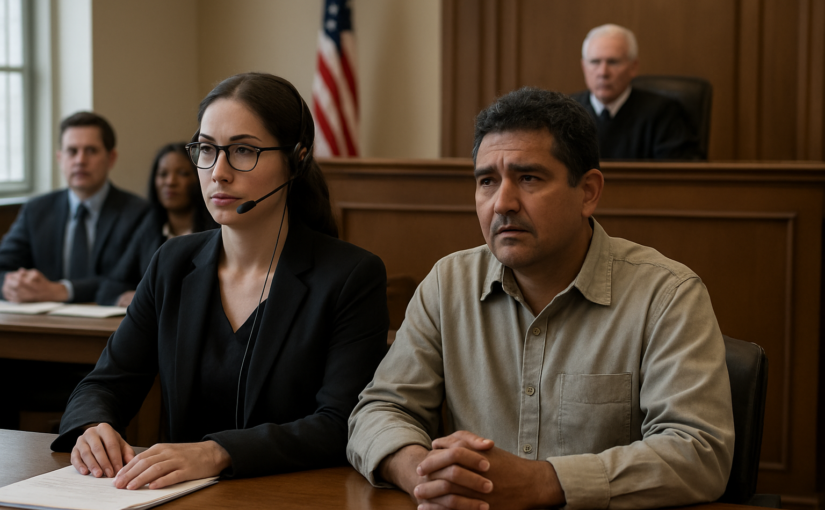
Understanding criminal proceedings in the us is essential for aspiring court interpreters. Interpreters do far more than convert words from one language to another: they help protect due process, support meaningful participation, and preserve the integrity of the record. For students preparing to work in legal settings, a chronological view of the criminal case process can make criminal court terminology easier to master and help clarify what is expected at each hearing.
This guide walks through the major stages of criminal proceedings in the US for interpreters: arraignment, preliminary hearing, pre-trial conferences, plea bargaining, jury trial, and sentencing. Along the way, we will highlight the interpreter’s role, common challenges, and practical preparation strategies. Because procedures vary by state, county, and court level, interpreters should always confirm local rules with the relevant court system or official source, such as a state judicial branch or the Judicial Council of California.
Why Legal Interpreters Must Understand Criminal Proceedings in the US
Many new interpreters focus first on vocabulary, memory, note-taking, and ethics. Those skills are critical, but legal interpreting also requires procedural knowledge. If you know where a hearing fits in the life of a case, you can better anticipate the pace, register, and communication needs involved.
For example, an arraignment may move quickly and include standardized advisements, while a sentencing hearing may involve emotionally charged victim statements, probation recommendations, and technical terms about custody credits or conditions of supervision. The interpreter’s core ethical duties remain the same, but the communication environment changes from stage to stage.
Knowing the legal interpreter court stages can help you:
- Prepare terminology in context rather than as isolated word lists
- Recognize who is speaking and why their speech matters procedurally
- Manage mode selection, such as simultaneous for advisements and consecutive for witness testimony
- Maintain accuracy when legal consequences hinge on a single phrase
- Understand when to request clarification, repetition, or a pause on the record
Before the Hearing: The Interpreter’s Baseline Responsibilities
Before we move chronologically through criminal proceedings in the us, it is helpful to review the interpreter’s baseline responsibilities in court. While exact standards differ by jurisdiction, trained court interpreters are generally expected to:
- Interpret completely and accurately, without summarizing or omitting
- Remain impartial and avoid advocacy
- Protect confidentiality as required by court rules and ethics
- Use the first person when interpreting statements
- Alert the court to communication barriers, such as inaudibility, overlapping speech, or ambiguous language
- Avoid giving legal advice or explaining strategy to a party
In many courts, interpreters may work in both open court and attorney-client settings. That means they must handle formal courtroom speech, whispered simultaneous interpretation, sidebars if permitted, and short off-the-record communications with equal discipline.
Stage 1: Arraignment
What Happens at Arraignment
Arraignment is often the defendant’s first formal court appearance after charges are filed. At this stage, the court typically:
- Calls the case
- Advises the defendant of the charges
- Informs the defendant of basic rights
- Addresses counsel, appointment of counsel, or waiver issues
- Asks for a plea, often guilty, not guilty, or no contest where allowed
- May address bail, release conditions, or scheduling
Arraignments can be brief and highly standardized, but they move fast. The court may process many cases in one session, and interpreters must stay alert to names, case numbers, statutes, and routine advisements.
The Interpreter’s Role at Arraignment
At arraignment, the interpreter often provides:
- Simultaneous interpretation of the judge’s advisements to the defendant
- Consecutive interpretation when the defendant answers questions
- Interpretation during short attorney-client consultations
This stage tests precision with foundational criminal court terminology, including words and phrases such as:
- Complaint
- Information
- Indictment
- Counts
- Enhancement
- Bail
- Own recognizance
- Waiver of rights
- Appointed counsel
- Enter a plea
Because defendants may be hearing these concepts for the first time, interpreters must resist the temptation to simplify beyond the speaker’s words. If a term has no exact equivalent, the interpreter should use the best legally accurate rendering available and maintain the register of the original.
Practical Challenge
One common challenge is speed. A judge may recite rights rapidly from a standard script. If the pace makes accurate interpretation impossible, the interpreter should respectfully notify the court. Accuracy takes priority over keeping up appearances.
Stage 2: Preliminary Hearing
What Happens at a Preliminary Hearing
Not every criminal case has a preliminary hearing, and procedures differ by jurisdiction. In felony matters, a preliminary hearing is often used to determine whether there is sufficient evidence, or probable cause, to require the defendant to answer on the charges and move the case forward.
At this hearing, the prosecution may call witnesses, often law enforcement officers or civilian witnesses. The defense may cross-examine and, depending on local law, may present limited evidence or argument. The judge then decides whether the case proceeds.
The Interpreter’s Role at the Preliminary Hearing
This is one of the first stages where witness testimony may become central. The interpreter may be called on to:
- Interpret sworn testimony in consecutive mode
- Interpret objections, rulings, and legal argument
- Provide simultaneous interpretation for the defendant during proceedings
- Interpret attorney-client consultations before, during, or after testimony
Here, command of criminal court terminology becomes even more important. Interpreters may hear terms such as:
- Probable cause
- Direct examination
- Cross-examination
- Redirect
- Foundation
- Hearsay
- Motion to strike
- Sustained
- Overruled
- Exhibit
- Identification
- Chain of custody
Because testimony creates or supports the court record, interpreters must preserve hesitations, qualifiers, register shifts, and incomplete answers. A witness who says, “I think it was around 10:00, maybe a little later,” should not become “It was 10:00.”
Scenario from Real Interpreting Work
Imagine a Spanish-speaking defendant at a preliminary hearing in an assault case. An officer testifies: “The witness stated she saw the defendant raise a metal object, but she could not say with certainty whether it was a tire iron.” The defense attorney immediately objects to part of the testimony as hearsay, and the judge asks the prosecutor to clarify the purpose of the statement.
For the interpreter, several tasks are happening at once:
- Interpret the officer’s testimony accurately, including uncertainty
- Switch quickly to simultaneous mode for the defendant when attorneys argue the objection
- Maintain the distinction between what the officer observed and what the witness allegedly said
- Be ready to ask for repetition if counsel begin speaking over one another
This is a realistic example of why procedural knowledge matters. If you understand the function of testimony and objections at this stage, you are better equipped to manage the linguistic demands without losing legal meaning.
Stage 3: Pre-Trial Conferences
What Happens at Pre-Trial Conferences
Pre-trial conferences vary widely. They may be formal hearings in open court or shorter appearances focused on scheduling, motions, discovery status, witness issues, plea discussions, or trial readiness. Sometimes multiple pre-trial conferences occur in the same case.
Topics may include:
- Continuances
- Exchange of discovery
- Motions in limine
- Suppression issues
- Witness availability
- Interpreter needs for trial
- Settlement or plea negotiations
The Interpreter’s Role at Pre-Trial Conferences
For interpreters, pre-trial conferences can be deceptively complex. The hearing may appear routine, but lawyers often use dense procedural language and move quickly through case management details. In addition, attorney-client communication may increase at this stage.
The interpreter must be prepared to handle terms such as:
- Discovery
- Continuance
- Motion calendar
- Suppression motion
- Brady material
- Readiness
- Waive time
- Set for trial
- Out of custody / in custody
One challenge is that the defendant may ask the interpreter, “What does that mean?” If the question seeks legal advice or strategic explanation, the interpreter must not answer substantively. A proper response may be to interpret the question to counsel so the attorney can explain.
Professional Tip
Pre-trial settings are a good reminder that interpreters are language professionals, not case managers or legal advisors. Staying within role boundaries protects both the interpreter and the defendant.
Stage 4: Plea Bargaining
What Plea Bargaining Involves
Many criminal cases resolve through negotiated pleas rather than trial. Plea bargaining may happen informally between hearings, in the hallway, in lockup, in a conference room, or on the record in open court. A plea agreement may involve reduced charges, dismissal of some counts, a sentencing recommendation, or other negotiated terms.
Because a guilty or no contest plea can waive important rights and create lasting consequences, this stage is especially sensitive.
The Interpreter’s Role in Plea Discussions
The interpreter may be present during attorney-client discussions and later during the plea colloquy in court. The interpreter’s role includes:
- Interpreting all communications accurately and completely
- Preserving confidentiality where applicable
- Maintaining neutrality even when emotions run high
- Ensuring the defendant hears the rights being waived and the consequences being stated
Common terminology may include:
- Plea offer
- Lesser included offense
- Dismissal
- Stipulated sentence
- Waiver of trial rights
- Immigration consequences
- Restitution
- Probation
- Custody credits
Interpreters should be particularly careful with rights advisements. In many jurisdictions, the court will ask whether the defendant understands the rights being waived, such as the right to trial, to confront witnesses, and against self-incrimination. The interpreter must convey these concepts faithfully, without personal explanation or pressure.
Because laws and collateral consequences can change, interpreters should never rely on memory alone for legal substance. The attorney and court provide the legal explanation; the interpreter provides the language access.
Stage 5: Jury Trial
What Happens During Trial
The jury trial is the most widely recognized stage of criminal proceedings in the us. Although not every case reaches trial, interpreters who do courtroom work must understand its structure. A trial may include:
- Jury selection or voir dire
- Opening statements
- Prosecution case-in-chief
- Defense case
- Rebuttal evidence
- Closing arguments
- Jury instructions and deliberation
- Verdict
Trials are linguistically demanding because they combine formal legal argument, spontaneous testimony, evidentiary rulings, and emotional content.
The Interpreter’s Role During Jury Trial
Depending on the jurisdiction and assignment, the interpreter may:
- Provide simultaneous interpretation to the defendant throughout the proceedings
- Interpret witness testimony in consecutive mode if the witness has limited English proficiency
- Interpret side consultations between attorney and client
- Assist the court in identifying when speech is too fast, too soft, or overlapping
Trial terminology often includes:
- Voir dire
- Peremptory challenge
- Challenge for cause
- Opening statement
- Sidebar
- Stipulation
- Impeachment
- Prior inconsistent statement
- Beyond a reasonable doubt
- Lesser offense
- Verdict form
Mode Management at Trial
Trial is where mode discipline becomes crucial. An interpreter may shift repeatedly between:
- Simultaneous for the defendant to follow the proceedings in real time
- Consecutive for testimony and question-answer exchanges
- Sight translation for short written forms if requested and permitted
Not every document should be sight translated informally in court. Local rules and judicial direction matter. If a written advisement or plea form is involved, interpreters should follow the court’s instructions and professional standards.
Team Interpreting and Fatigue
Long trials may require team interpreting. Sustained simultaneous interpretation is cognitively demanding, and fatigue can affect accuracy. Courts increasingly recognize the need for interpreter rotation in lengthy proceedings. Policies vary, so interpreters should confirm local practice with the court.
Stage 6: Sentencing
What Happens at Sentencing
If the defendant is convicted after trial or enters a plea, the case proceeds to sentencing. At this stage, the court may consider:
- The statutory sentencing range
- Probation recommendations
- Aggravating and mitigating factors
- Victim impact statements
- Restitution
- Fines and fees
- Custody credits
- Conditions of probation, parole, or supervision
Sentencing can be brief or highly contested, depending on the case.
The Interpreter’s Role at Sentencing
Sentencing requires accuracy, emotional steadiness, and strong command of numbers and conditions. The interpreter may need to render:
- Technical sentencing language
- Recommendations from probation or counsel
- Victim statements that may be emotionally intense
- The judge’s final sentence and conditions
Common terminology includes:
- Mitigation
- Aggravation
- Concurrent sentence
- Consecutive sentence
- Suspended sentence
- Probation terms
- Protective order
- Restitution order
- Credit for time served
This stage is especially important because misunderstanding a probation condition or protective order can lead to future violations. Interpreters must be precise with dates, durations, distances, reporting requirements, treatment conditions, and financial obligations.
Practical Preparation Strategies for Interpreters
If you want to build confidence in criminal proceedings in the US for interpreters, study procedure and terminology together. Here are practical ways to prepare:
- Create stage-based glossaries. Organize terms by arraignment, preliminary hearing, trial, and sentencing instead of one giant list.
- Practice mode switching. Train yourself to move from simultaneous to consecutive and back again without losing composure.
- Shadow real court speech. Listen to publicly available legal hearings or educational recordings and practice register control.
- Study ethics in context. Ask yourself what impartiality, completeness, and confidentiality look like at each stage.
- Review local court resources. Procedures differ by state. Confirm terminology and workflow with official judicial sources.
For certification candidates, it is also smart to verify current requirements, exam formats, fees, and eligibility rules directly with the relevant official bodies. Court interpreter certification rules may come from a state court system or judicial branch. For medical interpreting, candidates often check official sources such as NBCMI, CCHI, IMIA, or NCIHC because standards and details can change over time.
Quick Reference: Legal Interpreter Court Stages
| Stage | Main Purpose | Interpreter Focus |
|---|---|---|
| Arraignment | Advise charges and rights, enter plea | Fast advisements, pleas, bail language |
| Preliminary Hearing | Assess probable cause in applicable cases | Testimony, objections, evidentiary terms |
| Pre-Trial Conferences | Manage case progress and motions | Procedural language, attorney-client communication |
| Plea Bargaining | Negotiate and enter plea agreement | Rights waivers, consequences, neutrality |
| Jury Trial | Determine guilt or innocence | Mode switching, sustained concentration, testimony |
| Sentencing | Impose penalty and conditions | Numbers, conditions, emotional statements |
FAQ: Criminal Proceedings in the US for Interpreters
1. Do all criminal cases go through every stage listed here?
No. Many cases resolve early through dismissal or plea agreement, and some jurisdictions handle certain steps differently. The sequence in this article is a common framework, not a universal script.
2. Can an interpreter explain legal terms to a defendant?
Not as legal advice. An interpreter may interpret what was said, and in some settings may clarify that a communication problem exists, but substantive legal explanation belongs to the attorney or judge.
3. What interpreting modes are most common in criminal court?
Simultaneous is common for ongoing proceedings so the defendant can follow in real time. Consecutive is common for witness testimony and question-answer exchanges. Sight translation may be used for short documents when appropriate and authorized.
4. Is court interpreter certification the same in every state?
No. Requirements vary by jurisdiction. Always confirm current certification rules, exams, fees, and deadlines with the official state court or judicial branch responsible for interpreter programs.
5. Why is procedural knowledge so important for legal interpreters?
Because meaning in court depends on context. The same word can carry different weight depending on whether it appears in a plea, an objection, testimony, or a sentencing order.
Conclusion
For aspiring court interpreters, mastering criminal proceedings in the us is not just an academic exercise. It is a practical foundation for accurate, ethical, and confident performance in real courtrooms. From the speed of arraignment to the evidentiary detail of preliminary hearings, from the strategic language of pre-trial conferences and plea bargaining to the intensity of jury trial and sentencing, each stage presents distinct demands on the interpreter.
When you understand the sequence of legal interpreter court stages, you can prepare terminology more effectively, anticipate communication challenges, and support language access without stepping outside your role. That combination of language skill, procedural knowledge, and professional ethics is what strong legal interpreters bring to the courtroom.
If you are serious about building those skills and preparing for certification, train with professionals who understand both legal and medical interpreting pathways. Visit interpretingschool.com to strengthen your terminology, courtroom readiness, and exam preparation so you can move toward a successful interpreting career with confidence.