 apply now
 (213) 385 – 7781
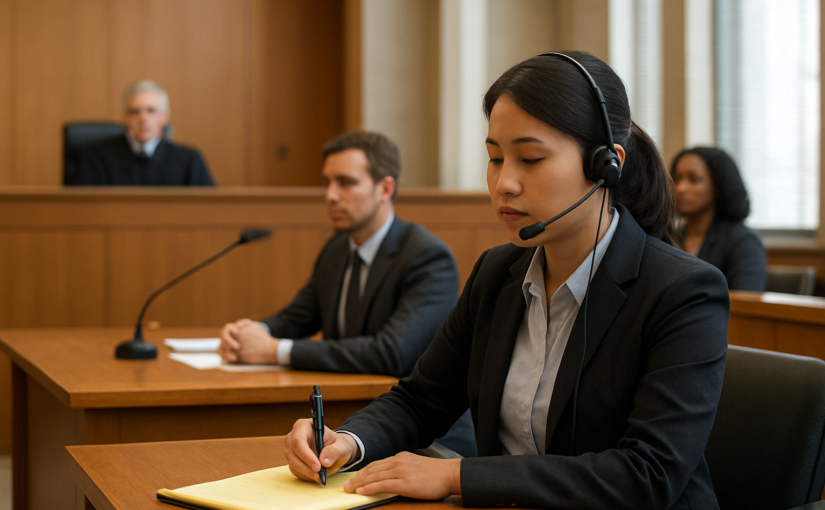
If you are planning for the california court interpreter test 2027, the smartest move is to understand the full testing pipeline before registration opens. In California, becoming a court interpreter is not a one-exam process. Candidates typically move through a written screening stage and then, for many languages, an oral performance exam known as the Bilingual Interpreting Exam or BIE. Because timelines, fees, and available test languages can change, aspiring interpreters should use this guide as a practical roadmap and then confirm every current detail with the official Judicial Council of California.
For first-time candidates, the process can feel confusing: Which exam comes first? What score do you need? How often is the oral exam offered? What happens if your language is designated rather than certified? This article breaks down the California Judicial Council interpreter exam path, explains the difference between the written and oral components, highlights common mistakes, and offers realistic preparation advice for candidates who want to pass on the first attempt.
How the California Court Interpreter Certification Process Works
When people search for the California court interpreter test 2027, they are often referring to the entire certification pathway, not just a single exam. In practice, California court interpreter candidates usually encounter two major testing stages:
- A written screening exam, which measures English proficiency, vocabulary, reading comprehension, and language usage in a legal context.
- An oral performance exam, often the bilingual interpreting examination California candidates know as the BIE, which tests interpreting skill in realistic courtroom modes.
The exact sequence and eligibility rules can vary by language and by current Judicial Council policy. Some languages are part of the certified interpreter program, while others may fall under registered or designated categories. That distinction matters because not every language follows the identical oral testing route.
Certified vs. Registered or Designated Languages
California courts work with many languages, but the state does not always test every language in exactly the same way. Broadly speaking:
- Certified languages are those for which California offers a full certification exam process, often including a standardized oral exam.
- Registered or designated languages may involve different qualification steps, alternative assessments, or additional documentation requirements.
That is why candidates should avoid assuming that a friend’s experience in Spanish, Mandarin, or Armenian will match the process for another language. Always verify your language status and current testing options through the official Judicial Council interpreter exam information page.
Step 1: The Written Screening Exam
For many candidates, the written exam is the first gatekeeper. It is not an interpreting performance test. Instead, it evaluates whether you have the language control and reading ability needed to move forward in the court certification process.
What the Written Exam Usually Measures
Although formats may evolve, the written screening generally focuses on high-level English language competence and analytical reading skills. Typical tested areas include:
- Reading comprehension
- Vocabulary and usage
- Grammar and syntax
- Standard written English
- Register recognition and precision with formal language
This matters because court interpreters do much more than “know two languages.” They must process legal speech accurately, distinguish subtle meaning, and maintain formal register under pressure. The written screening is designed to identify whether a candidate has the baseline linguistic sophistication to continue.
Typical Passing Benchmark
California has historically used a minimum passing score on the written exam before a candidate can advance to the oral stage. The exact benchmark may be expressed as a percentage or scaled score depending on the exam administration. A commonly referenced threshold in court interpreter testing is around 80%, but candidates should not rely on memory, forum posts, or old prep materials. For the california court interpreter test 2027, confirm the current passing standard directly with the Judicial Council interpreter exam notices.
Common Mistakes on the Written Screening
- Underestimating the exam: Strong bilingual speakers often assume the written test will be easy. It usually is not.
- Ignoring legal-style English: General conversational fluency is different from court-level comprehension.
- Rushing through reading passages: Precision matters more than speed alone.
- Studying only terminology lists: Vocabulary helps, but syntax and reading logic are just as important.
- Not practicing timed conditions: Time pressure can expose weaknesses in concentration and test strategy.
Step 2: The Oral Exam — Bilingual Interpreting Exam (BIE)
Once a candidate passes the written screening and meets any other eligibility requirements, the next major hurdle is often the Bilingual Interpreting Exam. This is the part most people mean when they mention the Judicial Council interpreter exam in practical terms, because it tests whether you can actually perform as a court interpreter.
The oral exam is where bilingual ability alone stops being enough. Candidates must demonstrate professional interpreting technique, legal register control, memory, note-taking discipline, and the ability to reproduce meaning accurately without additions, omissions, or distortions.
What the BIE Usually Includes
While exact sections can vary, California court interpreter oral exams commonly test the three core modes used in court:
- Sight translation into English
- Sight translation from English into the non-English language
- Consecutive interpreting
- Simultaneous interpreting
These sections mirror real courtroom work. A court interpreter may be asked to interpret a witness’s testimony consecutively, provide simultaneous interpretation for a defendant during proceedings, and sight translate a minute order, waiver form, or advisement document.
Why the Oral Exam Is So Challenging
The oral exam is difficult because it measures multiple competencies at once:
- Listening accuracy
- Short-term memory
- Legal terminology
- Register preservation
- Delivery control
- Ethical neutrality
- Self-monitoring under pressure
A candidate can understand every word and still fail if they omit qualifiers, shift tone, simplify legal phrasing, or lose track of embedded details such as dates, names, numbers, or negatives.
Typical Passing Standards for the Oral Exam
Passing standards for oral court interpreter exams are often demanding. In many court systems, candidates must achieve a minimum overall score and may also need to meet section-specific thresholds. California has historically used rigorous scoring for the BIE, and oral pass rates are often much lower than candidates expect.
Because scoring models can change, avoid relying on outdated internet summaries. For the California court interpreter test 2027, check the current candidate handbook or official test bulletin for:
- Required minimum score
- Whether each mode is weighted differently
- Any rules about retakes
- How score reports are issued
California Court Interpreter Test 2027 Registration Windows
Registration timing is one of the easiest places to make a preventable mistake. Candidates who are fully prepared sometimes lose months because they miss a filing window, submit incomplete materials, or fail to monitor official announcements.
When Registration Usually Opens
The Judicial Council of California typically posts examination announcements, application periods, and available test dates on its official interpreter program pages. Depending on the year and the exam type, registration may be offered:
- On a fixed annual schedule
- In multiple windows throughout the year
- Only when sufficient candidate demand exists for a language
- At limited test sites with capped seating
For that reason, candidates targeting the california court interpreter test 2027 should start checking official notices well in advance, ideally several months before they hope to test.
What You May Need to Register
Although exact requirements vary, candidates often need to provide:
- Legal name and contact information
- Language pair information
- Proof of eligibility, if required
- Exam application forms
- Payment of exam fees
- Requests for accommodations, if applicable
Fees can change over time. Written exam fees and oral exam fees are often separate, and oral performance testing may cost more than the written screening. Expect fees to fall within a typical professional licensing exam range, but do not quote old numbers to yourself. Confirm current pricing directly with the Judicial Council interpreter exam registration materials.
Best Practices for Registration
- Create a checklist of all forms and deadlines.
- Use the exact name that appears on your identification.
- Save confirmation emails and payment receipts.
- Apply early rather than waiting until the final day.
- Watch your email for follow-up instructions or scheduling details.
What First-Time Candidates Often Get Wrong
Many aspiring interpreters prepare hard but still approach the exam the wrong way. Here are the most common pitfalls we see among first-time candidates for the bilingual interpreting examination California process.
1. Confusing Bilingualism with Interpreting Skill
Speaking two languages at home, at work, or in the community is valuable, but it is not the same as interpreting in court. Court interpreting requires:
- Mode control
- Terminology precision
- Memory training
- Register matching
- Ethics and protocol
A candidate who has never practiced formal consecutive or simultaneous interpreting usually struggles on the oral exam, even if they are highly educated and fully bilingual.
2. Studying Terminology Without Practicing Delivery
Memorizing legal terms is helpful, but oral exams are performance-based. Candidates often know the right word when they are calm and reading notes, then freeze when they must deliver it instantly while processing the next phrase.
Preparation must include active drills, not just passive review.
3. Neglecting Sight Translation
Sight translation is often underestimated because candidates think, “I can read both languages.” But exam sight passages test much more than reading. You must:
- Recognize legal syntax quickly
- Maintain smooth oral delivery
- Avoid paraphrasing
- Preserve meaning and register
4. Weak Note-Taking in Consecutive
In court, a witness may produce a dense answer with names, dates, times, locations, and qualifiers such as “approximately,” “I think,” or “to the best of my recollection.” Missing those details can cost points on the exam and create serious problems in real proceedings.
5. Failing to Prepare for Stress
Test anxiety causes otherwise capable candidates to speak too fast, self-correct excessively, or mentally shut down after one mistake. Professional preparation should include mock testing under timed, realistic conditions.
A Realistic Courtroom Scenario: Why Technique Matters
Imagine you are interpreting during a misdemeanor arraignment. The judge says:
“You are charged with violating Penal Code section 273.5(a). You have the right to counsel, the right to remain silent, and the right to a speedy public trial. Do you understand and waive formal reading of the complaint?”
A first-time candidate who is only casually bilingual may understand the general idea but still make critical errors, such as:
- Omitting the code section
- Replacing “waive formal reading” with a vague summary like “skip the paperwork”
- Confusing “right to remain silent” with “you should stay quiet”
- Changing the register from formal legal language to casual speech
Now imagine the defendant responds:
“I understand some of that, but I don’t know what the complaint says exactly, and I want a lawyer before I answer anything.”
In a real courtroom, the interpreter must render that response completely and neutrally, including uncertainty, hesitation, and legal significance. The exam is designed to detect whether you can do that consistently.
How to Prepare Strategically for the Judicial Council Interpreter Exam
Strong preparation is not random. It should mirror the actual demands of the testing pipeline.
For the Written Screening
- Read complex English texts regularly, especially legal and administrative writing.
- Review advanced grammar, syntax, and usage.
- Practice timed reading comprehension sets.
- Build vocabulary in formal, legal, and procedural contexts.
For the Oral BIE
- Practice all three major modes: sight, consecutive, and simultaneous.
- Record yourself and review for omissions, additions, and register shifts.
- Develop a reliable note-taking system for consecutive.
- Use authentic court-style materials whenever possible.
- Train with feedback from experienced interpreter instructors.
Build a Weekly Study Plan
A practical plan for a working adult might look like this:
| Day | Focus |
|---|---|
| Monday | Written exam reading and vocabulary drills |
| Tuesday | Sight translation in both directions |
| Wednesday | Consecutive practice with note-taking |
| Thursday | Simultaneous interpreting practice |
| Friday | Legal terminology and ethics review |
| Weekend | Mock exam and error analysis |
What to Verify on Official Sources for 2027
Because policies and schedules can change, candidates should confirm the following on official sources before acting:
- Written exam registration dates
- Oral BIE registration dates
- Available languages
- Current exam fees
- Passing score requirements
- Retake waiting periods
- Test center locations or remote testing policies
- Required orientation, background, or onboarding steps after passing
For court interpreting, the best official source is the Judicial Council of California. For medical interpreter candidates comparing pathways, organizations such as NBCMI, CCHI, IMIA, and NCIHC are useful references for current standards and terminology in the healthcare field.
FAQ: California Court Interpreter Test 2027
1. Is the written exam the same as the oral court interpreter exam?
No. The written screening tests high-level English language skills and reading ability, while the oral exam tests actual interpreting performance in courtroom modes such as sight, consecutive, and simultaneous.
2. How hard is the California court interpreter oral exam?
It is widely considered challenging. Many first-time candidates underestimate the performance demands. Success requires much more than bilingual fluency; it requires trained interpreting technique and strong legal register control.
3. When should I register for the California court interpreter test 2027?
As early as possible once the official registration window opens. Check the Judicial Council of California regularly because schedules, languages, and seat availability may change.
4. What score do I need to pass?
Passing benchmarks vary by exam component and may be updated. Historically, written screenings often require a strong minimum score, and oral exams use rigorous scoring standards. Always verify current thresholds in the official candidate materials.
5. Can I prepare on my own?
You can start on your own, but most candidates benefit from structured training, mock exams, and expert feedback. This is especially true for simultaneous and consecutive interpreting, where technique matters as much as vocabulary.
Final Thoughts on the California Court Interpreter Test 2027
The california court interpreter test 2027 is best understood as a multi-step professional screening process, not a single test day. First, you must clear the written screening. Then, for many languages, you must prove your real-world courtroom interpreting ability through the Judicial Council interpreter exam oral stage, often the bilingual interpreting examination California candidates call the BIE. Along the way, registration timing, score requirements, language classification, and exam availability all matter.
If you want to avoid the most common first-time candidate mistakes, do not rely on bilingual ability alone. Train deliberately. Practice under exam conditions. Build your legal vocabulary, note-taking, memory, and delivery skills. Most importantly, verify all 2027 dates and requirements with the Judicial Council of California before you register.
If you are serious about passing the california court interpreter test 2027, now is the time to prepare with structure and expert guidance. InterpretingSchool.com helps aspiring court and medical interpreters build the skills, confidence, and exam readiness needed for certification. Explore our training programs and start preparing for success today.