 apply now
 (213) 385 – 7781
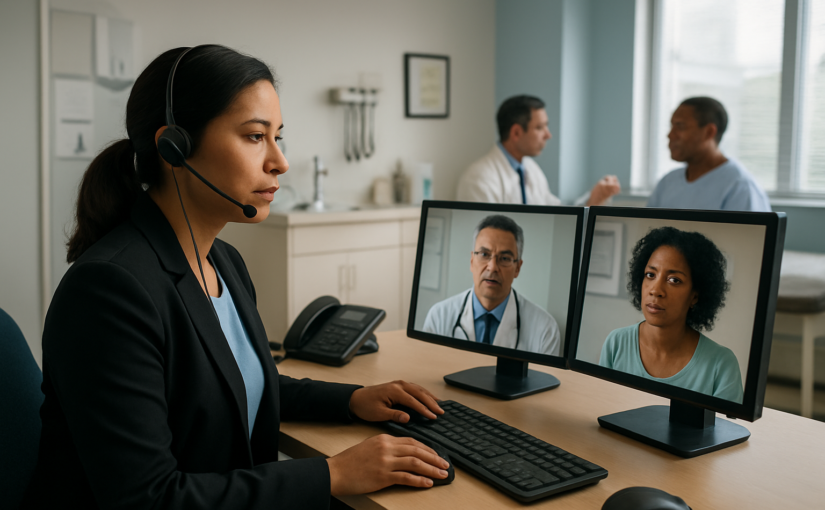

The prospect for medical certified interpreter job opportunities is stronger and more varied than many aspiring interpreters realize. Healthcare systems need language access across emergency departments, outpatient clinics, specialty practices, behavioral health, rehabilitation, and now telehealth platforms that connect patients and providers across cities and states. For bilingual professionals considering this field, the path is no longer limited to one full-time hospital position. Today, the career landscape includes staff interpreter roles, contract work, per-diem assignments, and a growing range of remote medical interpreting careers through Over-the-Phone Interpreting (OPI), Video Remote Interpreting (VRI), and Remote Simultaneous Medical Interpreting (RSMI).
If you are exploring certification and training, understanding where the jobs are—and what employers expect—can help you choose the right preparation strategy. This article breaks down the healthcare interpreter job outlook, compares in-person hospital roles with remote agency work, and explains how certification can improve your competitiveness in both settings.
Why the Demand for Certified Medical Interpreters Continues to Grow
Several long-term trends support a positive prospect for medical certified interpreter job seekers.
- Linguistic diversity in patient populations: Hospitals and clinics regularly serve patients with limited English proficiency (LEP) who need accurate communication for informed consent, diagnosis, treatment planning, discharge instructions, and follow-up care.
- Legal and compliance obligations: Healthcare organizations that receive federal funding must provide meaningful language access under federal civil rights requirements. State laws, accrediting bodies, and risk management standards also shape language access practices.
- Patient safety concerns: Miscommunication in healthcare can lead to medication errors, incomplete histories, poor adherence, and avoidable readmissions. Trained interpreters reduce risk.
- Expansion of telehealth: Virtual care has increased the need for interpreters who can work effectively by phone or video.
- Specialization of medical services: Oncology, mental health, labor and delivery, pediatrics, surgery, and rehabilitation all require interpreters with strong terminology and protocol awareness.
In practical terms, demand does not always appear as a single hiring surge in one place. Instead, it often shows up as a broad mix of opportunities: staff openings at hospitals, registry or per-diem pools, agency assignments, telehealth vendors, and multilingual patient access teams. That means aspiring interpreters should evaluate not only whether jobs exist, but what type of work arrangement best matches their goals.
What “Certified” Means in Medical Interpreting
Before comparing job paths, it is important to clarify terminology. In healthcare, employers may use words like qualified, screened, trained, and certified differently. For national medical interpreter certification in the United States, aspiring candidates commonly research organizations such as:
- NBCMI (National Board of Certification for Medical Interpreters)
- CCHI (Certification Commission for Healthcare Interpreters)
Industry guidance and professional development resources may also come from organizations such as IMIA (International Medical Interpreters Association) and NCIHC (National Council on Interpreting in Health Care). Requirements, fees, exam formats, and language availability can change, so candidates should always confirm current details directly with the official source.
Many employers prefer or require national certification when available for the interpreter’s language pair, especially for higher-acuity assignments or staff positions. Even where certification is not mandatory, it often signals professionalism, ethics training, terminology mastery, and readiness for complex encounters.
In-Person Hospital Staff Roles: Stability, Team Integration, and Clinical Exposure
For many interpreters, the traditional goal is a staff hospital position. These jobs may be full-time, part-time, or per-diem and are often housed within language services, patient experience, interpreter services, or diversity/equity departments.
What Staff Hospital Interpreters Typically Do
An in-person staff interpreter may cover a broad range of assignments during one shift, including:
- Emergency department triage and physician evaluations
- Inpatient rounds
- Pre-op and post-op consultations
- Labor and delivery support
- Family meetings and care conferences
- Physical, occupational, and speech therapy sessions
- Discharge teaching and medication instructions
- Outpatient specialty visits
In larger systems, staff interpreters may also help with sight translation of short documents, scheduling coordination, chart-related workflows, and language access documentation according to institutional policy.
Advantages of Hospital Employment
- More stable income: Staff roles often provide a regular schedule and predictable caseload.
- Benefits: Depending on the employer, health insurance, paid time off, retirement plans, and continuing education support may be available.
- Professional community: Interpreters work closely with clinicians, social workers, nurses, and other interpreters, which can accelerate learning.
- Exposure to complex cases: Acute care settings build strong interpreting judgment, terminology depth, and ethical decision-making.
- Clear advancement pathways: Some interpreters move into lead interpreter, trainer, scheduler, quality assurance, or language access coordinator roles.
Challenges of Hospital Staff Roles
- Fast pace and emotional intensity: Staff interpreters may move quickly from routine appointments to trauma, end-of-life, or high-conflict situations.
- Variable schedules: Some systems require evening, weekend, holiday, or on-call coverage.
- Physical demands: Walking long distances, standing for extended periods, and moving between departments are common.
- Hiring competition: Strong hospitals may prefer candidates with formal training, certification, and prior medical interpreting experience.
Who Thrives in Staff Roles?
Hospital employment often suits interpreters who value consistency, teamwork, and immersion in clinical environments. If you want direct collaboration with providers and a strong foundation in healthcare workflows, this path can be ideal.
Remote Medical Interpreting Careers: OPI, VRI, and RSMI
The rise of telehealth and centralized language access models has expanded remote medical interpreting careers dramatically. While remote work was growing before, healthcare systems now use phone and video interpretation as core service channels rather than backup options alone.
Over-the-Phone Interpreting (OPI)
OPI is often used for shorter, urgent, or high-volume encounters such as scheduling, registration, triage, pharmacy calls, nurse callbacks, and basic provider communication. It is also common in settings where video equipment is unavailable.
Key skills for OPI:
- Excellent active listening
- Strong turn management without visual cues
- Clear diction and microphone technique
- Rapid memory retention and note-taking
- Ability to manage interruptions professionally
OPI can be a valuable entry point because agencies often need broad availability across time zones and languages. However, it can be demanding due to call volume, back-to-back assignments, and the challenge of interpreting without body language or environmental context.
Video Remote Interpreting (VRI)
VRI adds visual information, which can improve communication during clinical encounters where facial expressions, gestures, and demonstrations matter. VRI is common in outpatient visits, bedside consultations, urgent care, behavioral health, and telehealth appointments.
Advantages of VRI:
- More context than audio-only calls
- Useful for patient education and rapport
- Better support for visual cues and turn-taking
- Strong fit for telemedicine workflows
Challenges of VRI:
- Technical issues such as lag, audio echo, or poor camera placement
- Need for professional remote setup and privacy
- Potential fatigue from prolonged screen-based work
Remote Simultaneous Medical Interpreting (RSMI)
RSMI is a more specialized modality in which the interpreter renders speech simultaneously, often in structured telehealth or conference-style settings. It may be used for webinars, group education, large case conferences, or highly coordinated virtual medical encounters. Not every medical interpreter will work in RSMI, but demand has grown in systems that need efficient multilingual communication at scale.
RSMI generally requires:
- Excellent processing speed
- Advanced concentration and split attention
- Familiarity with simultaneous technique
- Comfort with remote audio platforms and headsets
- Strong terminology and preparation habits
Because simultaneous work is cognitively intense, agencies and institutions may reserve these assignments for interpreters with strong training and proven performance.
Hospital Roles vs. Remote Agency Work: A Practical Comparison
| Factor | Hospital Staff Role | Remote Agency Role |
|---|---|---|
| Work setting | On-site clinical environment | Home office or remote hub |
| Schedule | Often fixed or shift-based | May be flexible, on-demand, or variable |
| Income pattern | More predictable salary or hourly pay | May vary by call volume, hours, or contractor terms |
| Benefits | Often available in employee roles | Depends on employee vs. independent contractor status |
| Case complexity | High, with broad clinical exposure | Ranges from routine calls to specialized telehealth encounters |
| Professional integration | Embedded with care teams | Less direct integration with one institution |
| Technology demands | Moderate | High; requires reliable internet, equipment, and platform fluency |
| Best fit for | Those seeking stability and team-based work | Those seeking flexibility, remote access, or broader market reach |
Neither path is universally “better.” Many interpreters combine both over time. A common progression is to build foundational experience in one setting, then expand into another. For example, a staff interpreter may add remote evening shifts for extra income, while an agency interpreter may later pursue a hospital role for stability and benefits.
A Realistic Work Scenario: One Language, Two Career Paths
Consider Ana, a Spanish-English interpreter who has completed formal medical interpreter training and is preparing for national certification. She receives two opportunities.
- Hospital offer: A regional medical center hires her as a full-time staff interpreter for weekdays, with occasional rotating weekends. She covers inpatient rounds, the emergency department, and outpatient specialty clinics.
- Remote agency offer: A language services company offers OPI and VRI assignments from home, with flexible hours and a mix of scheduled telehealth sessions and on-demand calls.
In the hospital role, Ana quickly learns the rhythm of nursing units, physician handoffs, and discharge workflows. She becomes familiar with recurring terminology in cardiology, endocrinology, and maternal care. She also faces emotionally intense moments, such as interpreting for a family meeting after a serious diagnosis.
In the remote role, Ana gains a different kind of agility. She may interpret a pediatric follow-up by video at 9:00 a.m., a pharmacy clarification call at 9:20, a behavioral health intake at 10:00, and a primary care telehealth visit at 10:30. She develops strong headset discipline, concise intervention skills, and the ability to adapt quickly with limited context.
Both jobs build valuable competencies. The better fit depends on her priorities: structured team integration and benefits, or flexibility and location independence. For many interpreters, the strongest long-term strategy is to become competitive in both markets.
Healthcare Interpreter Job Outlook: What Employers Are Looking For
The healthcare interpreter job outlook is not just about bilingual ability. Employers increasingly screen for professionalism and risk reduction. Whether hiring for a hospital or a remote platform, many look for the following:
- Formal interpreter training: Especially training aligned with healthcare ethics, standards of practice, terminology, and role boundaries.
- Certification or eligibility: National certification can strengthen your resume and credibility.
- Medical terminology knowledge: Anatomy, symptoms, procedures, medications, and common specialties matter.
- Accuracy under pressure: Interpreters must manage pace, emotional content, and complex explanations.
- Confidentiality and ethics: HIPAA awareness and ethical decision-making are essential.
- Technology readiness: For remote work, employers may test internet speed, audio quality, and platform competence.
- Customer service and professionalism: Interpreters often represent the language access function directly to patients and providers.
This is one reason training matters so much. A candidate who can explain interpreter protocol, demonstrate note-taking discipline, and handle role-boundary questions well is often more attractive than a bilingual applicant without structured preparation.
Compensation, Scheduling, and Employment Models
Pay structures vary widely by region, language, modality, credentials, and employer type. Some hospital jobs pay hourly with benefits; others are salaried. Remote agencies may pay by hour, by minute, by encounter, or under contractor arrangements. Specialized languages, rare language demand, after-hours availability, and advanced modalities can affect compensation.
Because rates and policies change over time, candidates should verify current information directly with employers and official organizations. If you are comparing opportunities, ask specifically about:
- Employee vs. independent contractor classification
- Minimum hour guarantees or lack thereof
- Paid training and onboarding
- Required equipment and whether it is provided
- Weekend, holiday, or differential pay
- Cancellation policies for scheduled assignments
- Continuing education support
For long-term career planning, it is wise to compare total compensation rather than headline rates alone. A slightly lower hourly hospital role may be financially stronger when benefits, paid leave, and stable scheduling are included. On the other hand, a remote interpreter with efficient scheduling and multiple clients may prefer the flexibility and income potential of diversified contract work.
How Certification Can Improve the Prospect for Medical Certified Interpreter Job Seekers
The prospect for medical certified interpreter job candidates often improves when they combine language proficiency with formal training and certification readiness. Certification can help in several ways:
- Signals quality: Employers see certification as evidence that you take standards seriously.
- Supports advancement: It may help you qualify for staff roles, lead assignments, or specialized departments.
- Builds confidence: Preparing for certification deepens terminology, ethics, and interpreting technique.
- Improves marketability: Agencies and hospitals may prioritize certified interpreters when assigning more sensitive encounters.
Certification alone is not a guarantee of employment, but in a competitive market it can be a meaningful differentiator.
How to Position Yourself for Both Hospital and Telehealth Opportunities
If you want to maximize your options, prepare for both in-person and remote practice from the beginning.
1. Build a Strong Training Foundation
Choose a reputable interpreter training program that covers:
- Interpreter ethics and standards of practice
- Consecutive and sight translation skills
- Medical terminology and body systems
- Role boundaries and intervention techniques
- Note-taking and memory development
- Remote interpreting protocols
2. Research Certification Pathways
Review current eligibility requirements, language availability, fees, and exam details through official sources such as NBCMI and CCHI. Also monitor professional guidance from IMIA and NCIHC. Requirements can change, so use the official websites rather than relying on outdated summaries.
3. Practice in Multiple Modalities
Do not train only for face-to-face interpreting. Practice:
- Phone-only role plays
- Video telehealth simulations
- High-speed provider speech
- Patient education encounters
- Emotionally charged scenarios
4. Prepare a Professional Remote Setup
For remote medical interpreting careers, your workspace matters. Typical expectations include:
- Reliable high-speed internet
- Quality headset with noise control
- Quiet, private workspace
- Neutral professional background for video
- Basic troubleshooting ability
5. Learn the Hiring Language
When reading job postings, watch for terms such as:
- Qualified medical interpreter
- Certified healthcare interpreter
- Staff interpreter
- Per-diem interpreter
- VRI interpreter
- OPI interpreter
- Telehealth interpreter
- Language access specialist
Understanding these labels helps you target applications more effectively.
Common Mistakes Aspiring Medical Interpreters Should Avoid
- Assuming bilingualism is enough: Employers need trained interpreters, not just fluent speakers.
- Ignoring remote skills: Telehealth is now a major part of the market.
- Applying without terminology preparation: Medical vocabulary is a core screening area.
- Overlooking ethics: Role boundaries, confidentiality, and impartiality matter every day.
- Relying on outdated information: Always confirm current certification and professional requirements with official sources.
FAQ
Is the prospect for medical certified interpreter job opportunities better in hospitals or remote agencies?
Both can offer strong opportunities. Hospitals may provide more stability and benefits, while remote agencies may offer flexibility and wider geographic access. Your best option depends on your goals, schedule, and preferred work style.
Do I need certification to start working as a medical interpreter?
Not always. Some employers hire trained interpreters before certification, especially if the candidate is certification-eligible. However, certification can improve competitiveness and may be preferred or required for certain roles.
What is the healthcare interpreter job outlook for telehealth?
The healthcare interpreter job outlook for telehealth remains promising because providers continue using video visits, centralized scheduling, and remote patient support. OPI and VRI are now standard tools in many healthcare systems.
Are remote medical interpreting careers suitable for beginners?
They can be, especially in structured agency environments. However, beginners still need formal training, strong ethics, terminology knowledge, and comfort with technology. Remote work is convenient, but it is not easy.
Where should I verify certification requirements and industry guidance?
Check official sources such as NBCMI, CCHI, IMIA, and NCIHC for current certification information, standards, and professional guidance. Policies, exam details, and fees may change over time.
Final Thoughts
The prospect for medical certified interpreter job seekers is broadening, not shrinking. Hospitals still need skilled in-person interpreters who can support patient safety in complex clinical environments. At the same time, telehealth, OPI, VRI, and specialized remote services are creating new lanes for interpreters who are well trained, technologically prepared, and ready to work across modalities.
If you are serious about entering this profession, the smartest move is to prepare for the full market: in-person hospital roles and modern remote medical interpreting careers. Strong training, ethical discipline, terminology mastery, and certification preparation can help you compete in both worlds.
Ready to build a real future in healthcare interpreting? Train with interpretingschool.com to strengthen your skills, prepare for certification, and position yourself for the growing prospect for medical certified interpreter job opportunities in hospitals, telehealth, and beyond.