 apply now
 (213) 385 – 7781
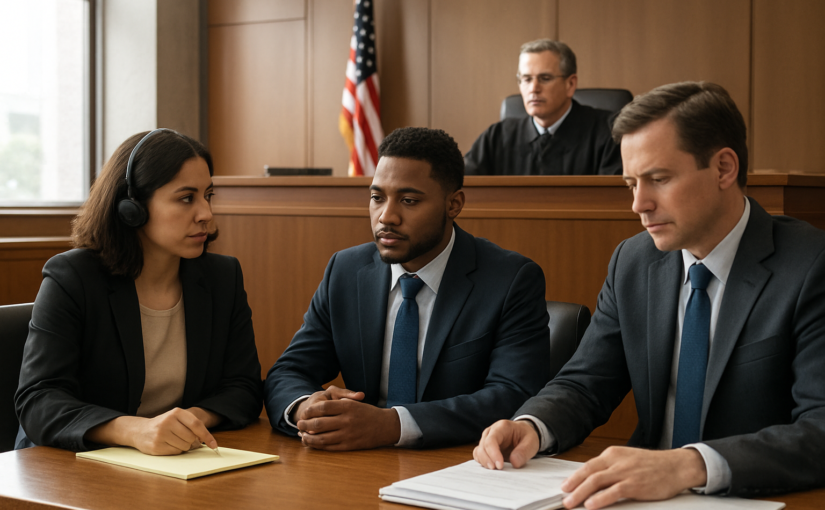
For anyone preparing to work in the courts, civil procedure for interpreters is not optional background knowledge—it is essential working knowledge. Court interpreters do far more than convert words from one language to another. They must follow the logic of a case, recognize where the hearing fits in the litigation process, and accurately render highly specific terminology under pressure. In civil matters, that means understanding how lawsuits begin, what motions ask the court to do, how standards differ from criminal cases, and why terminology can shift dramatically from one hearing to the next.
Aspiring interpreters often spend significant time studying criminal procedure, and for good reason. Criminal dockets are busy, and many certification exams include criminal concepts. But civil courtrooms present their own challenges. Personal injury disputes, landlord-tenant matters, family law proceedings, contract claims, restraining orders, and collection actions all require mastery of civil litigation legal terminology. If you plan to succeed in interpreting civil court hearings, you need a solid framework for how civil cases move from filing to judgment.
This guide explains the core civil procedure concepts court interpreters should understand, with special attention to torts, summons, motions to compel, summary judgment hearings, bench trials, and domestic relations cases. It also highlights how civil standards differ from criminal standards, so interpreters can better anticipate language, register, and courtroom dynamics.
Why Civil Procedure Matters for Court Interpreters
Interpreters are not attorneys, and they must never give legal advice. However, they do need enough procedural understanding to interpret accurately and completely. When an interpreter knows whether the court is addressing service of process, discovery disputes, evidentiary objections, or a final judgment, that interpreter is better equipped to:
- Recognize and render terminology consistently
- Anticipate the flow of questioning and argument
- Maintain accuracy when speakers use dense legal shorthand
- Keep pace during fast-moving hearings
- Avoid omissions caused by unfamiliar concepts
Consider how much meaning is packed into a sentence like: “Your Honor, defendant was properly served, failed to answer, and we are requesting default judgment after repeated noncompliance with discovery and the court’s prior order compelling production.” An interpreter who understands the procedural sequence will be far more likely to deliver a clear, precise interpretation than one hearing those terms as isolated vocabulary items.
That is why training in civil procedure for interpreters should include not just memorized glossaries, but also the structure behind the words.
The Big Picture: What Is a Civil Case?
A civil case is generally a dispute between private parties, businesses, or organizations, though government entities can also be involved. Unlike criminal cases, civil matters usually seek remedies such as money damages, injunctions, declaratory relief, custody orders, or enforcement of rights and obligations. The person bringing the case is usually the plaintiff or petitioner; the responding party is the defendant or respondent.
Common categories of civil cases include:
- Personal injury and other tort claims
- Contract disputes
- Property disputes
- Landlord-tenant matters
- Debt collection and consumer cases
- Employment disputes
- Domestic relations and family law matters
- Protective order and restraining order proceedings
Many of these hearings are emotionally charged, document-heavy, and terminology-dense. For interpreters, that means preparation must include legal concepts, procedural stages, and subject-specific vocabulary.
Key Stages in Civil Procedure for Interpreters
1. Filing the Complaint or Petition
A civil case often begins when the plaintiff files a complaint or, in some types of cases, a petition. This document states the factual allegations, legal claims, and requested relief. Interpreters may hear references to:
- Cause of action
- Allegations
- Prayer for relief
- Damages
- Verified complaint
- Petition and response
In domestic relations cases, the terminology may differ. Instead of a complaint, there may be a petition for dissolution, custody, support, or protection.
2. Summons and Service of Process
One foundational concept in civil procedure for interpreters is the summons. A summons is a formal notice informing the defendant or respondent that a legal action has been filed and that a response is required within a specified time. The summons must usually be delivered according to legal rules, a process known as service of process.
Important terms include:
- Personal service
- Substituted service
- Proof of service
- Service by publication
- Jurisdiction
- Notice
- Failure to appear
Interpreters should understand that service issues can determine whether a court may proceed. If service was defective, a hearing may be continued, a default may be set aside, or the case may be delayed. This context helps the interpreter track why attorneys are debating addresses, dates, signatures, or methods of delivery.
3. Answer, Default, and Early Motions
Once served, the defendant may file an answer, a motion to dismiss, or another responsive pleading. If the defendant fails to respond in time, the plaintiff may seek a default and later a default judgment.
At this stage, interpreters often hear procedural phrases such as:
- Failure to state a claim
- Lack of jurisdiction
- Insufficient service
- Affirmative defenses
- Extension of time
- Entry of default
Because attorneys frequently speak in compressed procedural language, familiarity with these terms is essential when interpreting civil court hearings.
4. Discovery
Discovery is the pretrial process in which parties exchange information and evidence. This stage generates a great deal of specialized civil litigation legal terminology. Common discovery tools include:
- Interrogatories
- Requests for production of documents
- Requests for admission
- Depositions
- Subpoenas
- Expert disclosures
Discovery disputes frequently lead to hearings, especially when one party claims the other failed to provide documents or answer questions fully.
5. Motions to Compel
A motion to compel asks the court to order a party to comply with discovery obligations. For interpreters, these hearings can be challenging because they often involve rapid exchanges about deadlines, objections, privilege, relevance, burden, and prior meet-and-confer efforts.
Terms commonly heard in a motion to compel hearing include:
- Good faith meet and confer
- Objections waived
- Privileged material
- Protective order
- Sanctions
- Incomplete responses
- Production deadline
- Supplemental responses
Interpreters should be prepared for attorneys to cite rule numbers, prior orders, and document requests by number. Precision matters because the court may issue a detailed order that affects what evidence can later be used.
6. Dispositive Motions and Summary Judgment Hearings
One of the most important concepts in civil procedure is summary judgment. A motion for summary judgment argues that there is no genuine dispute as to any material fact and that the moving party is entitled to judgment as a matter of law. Some jurisdictions also use partial summary judgment or summary adjudication for certain issues.
A summary judgment hearing is often argument-heavy and less focused on live witness testimony. Interpreters may hear phrases such as:
- Undisputed material facts
- Burden shifting
- Triable issue of fact
- Declaration under penalty of perjury
- Exhibit
- Opposition and reply
- As a matter of law
These hearings demand strong concentration because the language is abstract and analytical. Attorneys may move quickly between facts, procedural history, and legal standards. An interpreter who understands the purpose of summary judgment can better follow why the court is asking whether evidence creates a factual dispute for trial.
7. Trial: Bench Trial vs. Jury Trial
In a civil case, the matter may proceed to trial if it is not resolved earlier. Some civil cases are heard by a jury, while others are decided by a judge alone in a bench trial.
In a bench trial, the judge serves as the finder of fact and applies the law. Interpreters should expect terminology such as:
- Opening statement
- Direct examination
- Cross-examination
- Impeachment
- Exhibit admitted into evidence
- Objection sustained or overruled
- Findings of fact
- Conclusions of law
Bench trials can move differently from jury trials. Judges may interrupt more often, ask their own questions, and discuss evidentiary issues on the record in a more technical way. Interpreters must be ready to shift between witness testimony and dense legal colloquy.
Understanding Torts: A Core Civil Concept
Many civil cases involve torts, which are wrongful acts that cause harm and give rise to legal liability. Personal injury cases are among the most common examples. Torts can be intentional, negligent, or based on strict liability depending on the jurisdiction and claim.
Common tort-related terms include:
- Negligence
- Duty of care
- Breach
- Causation
- Damages
- Comparative negligence
- Premises liability
- Battery
- Defamation
- Emotional distress
For interpreters, tort hearings may involve medical records, accident reports, insurance language, and expert testimony. This creates overlap between legal and medical terminology, especially in injury cases. An interpreter working in this area should be comfortable with both procedural language and the vocabulary of treatment, diagnosis, and prognosis.
Domestic Relations Cases: Civil, but Different
Domestic relations cases are civil matters, but they often feel very different from other civil disputes. These may include divorce or dissolution, child custody, visitation or parenting time, child support, spousal support, paternity, and domestic violence protective orders. The emotional intensity is often high, and many litigants are self-represented.
Important terminology may include:
- Best interests of the child
- Legal custody
- Physical custody
- Parenting plan
- Temporary orders
- Contempt
- Support arrears
- Protective order
- Supervised visitation
- Mediation referral
Interpreters should also understand that domestic relations dockets frequently involve procedural informality compared with complex civil litigation, but that does not make them easier. Self-represented parties may speak in narratives, interrupt one another, or use non-legal language to describe legally significant facts. The interpreter must render everything accurately while preserving tone, register, and first person.
Civil vs. Criminal Standards: What Interpreters Must Notice
One of the most important distinctions in civil procedure for interpreters is that civil cases operate under different standards and goals than criminal cases.
Burden of Proof
In criminal cases, the prosecution generally must prove guilt beyond a reasonable doubt. In civil cases, the standard is usually lower, often a preponderance of the evidence, and in some matters clear and convincing evidence.
Interpreters must recognize these phrases because they are not interchangeable. A judge’s explanation of the applicable burden can be outcome-determinative.
Parties and Purpose
Criminal cases are brought by the government to punish offenses against the state. Civil cases usually concern private rights, responsibilities, compensation, or court orders regulating conduct and relationships.
Terminology Differences
Compare the language:
- Criminal: defendant, charges, plea, sentence, probation
- Civil: plaintiff, complaint, damages, injunction, judgment
Domestic violence can create overlap. A criminal assault prosecution is different from a civil protective order proceeding, even if both arise from similar facts. The interpreter must not assume terms, burdens, or procedural rights carry over from one setting to the other.
Constitutional and Procedural Context
Criminal defendants have specific constitutional protections related to counsel, self-incrimination, and confrontation. Civil litigants may have different rights depending on the proceeding and jurisdiction. Interpreters should know enough to understand the context, while always staying within the interpreter role and avoiding legal explanation.
Realistic Courtroom Scenario: Motion to Compel in a Personal Injury Case
Imagine you are assigned to interpret for a Spanish-speaking plaintiff in a personal injury lawsuit arising from a slip-and-fall accident at a grocery store. The hearing is on the defendant’s motion to compel further responses to interrogatories and requests for production.
The attorney for the defense argues:
“Plaintiff’s responses are evasive and incomplete. We requested prior treatment records, wage loss documentation, and photographs of the injuries. Counsel promised supplementation after the meet and confer, but nothing was produced. We request an order compelling verified responses within ten days and monetary sanctions.”
Plaintiff’s counsel responds:
“Some records have already been produced, and the remaining items are being gathered. The sanctions request is unwarranted because plaintiff has acted in good faith and there was confusion about the scope of the request.”
Why does procedural knowledge matter here?
- You need to understand that this is not a trial on liability; it is a discovery dispute.
- You must distinguish between verified responses, production, and sanctions.
- You should recognize that meet and confer refers to efforts to resolve the dispute before asking the court to intervene.
- You need enough context to keep pace when the judge references prior deadlines, request numbers, and objections.
An interpreter without procedural grounding may know the dictionary meaning of each word but still miss the legal function of the exchange. That is why serious training for court certification should include realistic civil hearing practice, not only vocabulary lists.
Practical Vocabulary Areas to Build for Interpreting Civil Court Hearings
If you are developing skill in interpreting civil court hearings, focus your study on recurring vocabulary clusters instead of isolated terms.
Procedural Terms
- Complaint, petition, answer, response
- Summons, service, proof of service
- Continuance, appearance, default
- Order, judgment, stay, dismissal
Discovery Terms
- Interrogatory, deposition, subpoena
- Production, disclosure, privilege
- Protective order, sanctions, compel
Trial Terms
- Exhibit, testimony, objection
- Foundation, relevance, hearsay
- Bench trial, verdict, findings
Damages and Remedies
- Compensatory damages
- Punitive damages
- Injunctive relief
- Specific performance
- Restitution
Family and Domestic Relations Terms
- Custody, visitation, support
- Protective order, compliance
- Modification, enforcement
- Best interests, mediation
As terminology varies by jurisdiction, interpreters should confirm local usage with official court glossaries, judicial branch resources, and training materials from recognized institutions.
How Aspiring Court Interpreters Should Study Civil Procedure
Strong interpreters do not memorize terms in a vacuum. They build procedural understanding alongside language skill, ethics, and delivery technique. A practical study plan can include:
- Read sample pleadings and motions. Review complaints, answers, motions to compel, and summary judgment papers to see how terminology appears in context.
- Watch or observe hearings. Many courts provide public access to proceedings. Observing actual hearings helps you hear pace, register, and courtroom management.
- Create topic-based glossaries. Organize by case stage: filing, service, discovery, motions, trial, and judgment.
- Practice sight translation. Civil courts rely heavily on written documents. Practice with summonses, orders, declarations, and minute entries.
- Drill formal register. Civil attorneys and judges often use dense, formal language. Your target language must preserve that level of formality where appropriate.
- Train with feedback. Work with experienced instructors who understand court standards and certification expectations.
If you are researching certification pathways, requirements, fees, and exam structures can change over time. Always verify current information with official sources such as your state court system or judicial council, and with relevant professional organizations. Depending on your career path, useful reference points may include the Judicial Council of California, the National Center for State Courts, NBCMI, CCHI, IMIA, and NCIHC.
Common Mistakes Interpreters Make in Civil Hearings
- Confusing civil and criminal terminology. For example, using criminal concepts in a custody or tort hearing.
- Missing procedural significance. Not understanding whether the court is deciding discovery, evidence, or final liability.
- Inconsistency with recurring terms. Changing equivalents for key terms like summons, default, or sanctions within the same hearing.
- Overexplaining. Interpreters must interpret, not teach the party what the law means.
- Underpreparing for document-heavy settings. Civil hearings often involve exhibits, declarations, and written orders that require sight translation skill.
FAQ: Civil Procedure for Interpreters
Do court interpreters need to know civil procedure if they are not lawyers?
Yes. Interpreters do not provide legal advice, but they need enough procedural knowledge to understand context, maintain accuracy, and handle legal terminology correctly.
What civil hearing types are most important to study first?
Start with common hearing types such as initial appearances in civil matters, motions to compel, protective order hearings, summary judgment hearings, bench trials, and family law proceedings.
Is civil court interpreting easier than criminal court interpreting?
Not necessarily. Civil hearings can be highly technical, document-heavy, and fast-paced. They often require strong command of abstract legal analysis and specialized vocabulary.
How can I improve my civil litigation legal terminology?
Study real court documents, build bilingual glossaries by topic, observe hearings, and practice with instructors who specialize in legal interpreting.
Do terminology and procedures vary by state?
Yes. Many core concepts are shared, but local rules, forms, and preferred terminology can differ. Always confirm details with the official court or judicial branch in the relevant jurisdiction.
Conclusion
Mastering civil procedure for interpreters is a critical step toward competent, confident court performance. From tort claims and summons issues to motions to compel, summary judgment hearings, bench trials, and domestic relations cases, civil dockets demand more than bilingual ability. They require procedural awareness, command of civil litigation legal terminology, and disciplined practice in interpreting civil court hearings accurately under pressure.
If you are serious about becoming a court interpreter, do not wait until exam season to learn these concepts. Build your foundation now with structured training, realistic practice, and expert feedback. Visit interpretingschool.com to strengthen your legal interpreting skills, prepare for certification, and train for the real demands of courtroom work.