 apply now
 (213) 385 – 7781
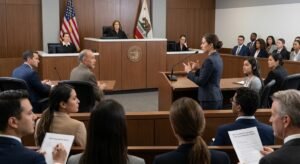
Mastering the Courtroom: Inside Our 1-Year Court Interpreter Program
Step into any courtroom in California, and you will immediately feel the weight of the justice system. The stakes are profoundly high, life-altering decisions are made daily, and every single word spoken carries legal weight. For a non-English speaking defendant, witness, or plaintiff, navigating this complex legal labyrinth is impossible without a highly skilled linguistic bridge. That bridge is the certified court interpreter. However, the gap between being comfortably bilingual and performing as a professional legal interpreter is immense. Bridging that gap requires intense cognitive conditioning, an exhaustive understanding of legal terminology, and flawless execution under immense pressure. At L.A. Translation and Interpretation, we have spent decades perfecting the training required to transform bilingual individuals into elite linguistic professionals.
Since our founding in 2003, our institution has been dedicated to eliminating language barriers and improving communication. We know that the California State Certification exam—specifically the Bilingual Interpreting Exam (BIE)—is famously one of the most rigorous linguistic assessments in the country. Passing this exam is not about luck; it is about systematic, relentless preparation. That is precisely why our 1-Year Court Interpreter Program is designed not just to teach, but to completely rewire how our students process language. Through a comprehensive curriculum taught by certified interpreters holding advanced degrees (MAs and Ph.Ds), we guide aspiring linguists through the three foundational pillars of legal interpretation: consecutive interpreting, simultaneous interpreting, and sight translation.
The Foundation: Navigating Legal Terminology and Written Proficiency
Before a student can master the spoken word in a high-speed courtroom environment, they must possess an ironclad grasp of both general and specialized vocabulary. The journey in our program begins with a deep dive into legal terminology, criminal procedures, and the specific jargon that populates the California justice system. A court interpreter cannot pause a high-profile trial to search for the correct translation of “arraignment,” “voir dire,” or “exculpatory evidence.” The vocabulary must be intrinsic.
Our curriculum meticulously prepares students for the written portion of the state exam, ensuring they understand the nuances of English vocabulary, grammar, reading comprehension, and the specific legal terminology required in the field. Students dissect the anatomy of the criminal justice system, learning the lifecycle of a case from the initial arrest and pre-trial hearings to sentencing and appeals. This foundational knowledge is critical because an interpreter cannot accurately translate a concept they do not conceptually understand. By immersing students in the legal framework first, we provide the context necessary for the advanced verbal gymnastics that follow in later semesters.
The First Pillar: Mastering Consecutive Interpreting
Consecutive interpreting is often the most heavily scrutinized mode of interpretation in the courtroom, primarily used during witness testimony. In this mode, the speaker delivers a few sentences or a long paragraph, pauses, and the interpreter then renders the entire segment into the target language. It sounds straightforward, but in a legal setting, it is anything but. Witnesses can be emotional, erratic, or highly technical. They might speak in fragmented sentences, use localized slang, or ramble for minutes at a time without taking a breath.
In our Court Interpreting modules, students are trained in advanced memory retention and specialized note-taking techniques. Human memory is fallible, especially under the stress of a courtroom. Therefore, our faculty instructs students on how to develop a personalized shorthand system—using symbols, spatial mapping, and abbreviations—to capture the core meaning, tone, and specific details of a speaker’s statement without trying to write down every single word.
During our interactive, small-group classes, students engage in rigorous mock-trial exercises. They practice listening to complex, emotionally charged testimonies, analyzing the core message in a fraction of a second, recording the critical data points on their notepads, and then delivering a flawless, confident translation that perfectly mirrors the original speaker’s tone, register, and intent. This hands-on practice builds the cognitive stamina required to maintain accuracy during hours of grueling testimony, ensuring our graduates are never caught off guard on the stand.
The Second Pillar: The Intensity of Simultaneous Interpreting
If consecutive interpreting is a test of memory and precision, simultaneous interpreting is the ultimate test of mental agility. This mode is used primarily when the interpreter is translating the ongoing proceedings—such as opening statements, jury instructions, or the judge’s rulings—directly to the non-English speaking defendant. The interpreter listens to the source language and speaks the target language at the exact same time, lagging only a few seconds behind the speaker.
Simultaneous interpreting requires a neurological split that is profoundly unnatural for the untrained brain. You are speaking while actively listening to something else, translating the previous sentence while absorbing the current one, and anticipating where the speaker’s syntax will end up. It is a high-wire act that requires absolute concentration.
Our Simultaneous Interpreting in the Criminal Court coursework breaks this overwhelming task down into manageable, progressive exercises. We start with shadowing techniques, where students practice repeating what they hear in the same language to train their brains to listen and speak simultaneously. Gradually, we introduce the translation element, starting with slow, predictable texts and building up to rapid-fire legal arguments.
Students learn how to manage “décalage”—the necessary delay between the speaker and the interpreter. They learn strategies for parsing complex, convoluted sentences, simplifying the syntax without losing a single drop of legal meaning. Because our classes are small, instructors provide immediate, individualized feedback. They can pinpoint exactly where a student’s cognitive overload occurs and provide targeted exercises to build their mental bandwidth. By the end of this training phase, the seemingly impossible task of simultaneous translation becomes a highly tuned reflex.
The Third Pillar: The Art of Sight Translation
The third major component of the California State Certification exam, and a daily reality for working court interpreters, is sight translation. This occurs when an interpreter is handed a written document—such as a plea agreement, a police report, a probation report, or a domestic violence restraining order—and must read it silently in one language while instantly speaking it aloud in another.
Sight translation is a unique hybrid of translation and interpreting. It requires the interpreter to rapidly scan a document, identify the grammatical structure, decode dense legal phrasing, and deliver a smooth, natural-sounding oral rendition. The danger in sight translation is falling into the trap of a literal, word-for-word translation, which often results in nonsensical grammar in the target language.
In our Sight Translation for Court Interpreters courses, students are exposed to a massive repository of authentic legal documents. Our faculty guides them through the process of chunking text—breaking down long, heavily modified legal sentences into digestible units of meaning. Students practice reading ahead, ensuring they understand the verb placement and subject-object relationship before they begin speaking. We focus heavily on maintaining a professional, steady pace of delivery, ensuring the interpreter sounds as though they are reading a document originally written in the target language. Through relentless, hands-on practice with the exact types of documents they will encounter on the exam and in the field, our students develop the visual processing speed and linguistic flexibility required to excel.
The Final Polish: Advanced Court Interpreting and Exam Readiness
As students progress into our Advanced Court Interpreting courses, the training wheels come off. The speed of the audio exercises increases, the complexity of the legal scenarios deepens, and the grading criteria become as strict as the actual state exam. We simulate the intense pressure of the BIE, providing comprehensive mock exams that test all three modes of interpreting consecutively.
At L.A. Translation and Interpretation, we believe that preparation must extend beyond linguistic competence; it must also include psychological resilience. Interpreting in a courtroom is stressful. Nerves can easily derail a perfectly capable interpreter during an exam or a high-profile trial. Our experienced faculty, who have spent years navigating these exact environments, mentor students on stress management, professional demeanor, and the strict ethical codes of impartiality and confidentiality that govern the profession.
Upon completing this rigorous 1-year journey with a grade of 70% or better, students are awarded a Certificate of Completion. But more importantly, they leave our institution equipped with a profound level of professional confidence. They are no longer just bilingual speakers; they are highly calibrated linguistic instruments, ready to facilitate justice and ensure that every individual, regardless of their native tongue, has a voice in the legal system.
The path to becoming a certified court interpreter in California is undeniably steep. It requires hundreds of hours of practice, a willingness to be corrected, and a relentless dedication to the craft. However, the reward is a dynamic, highly respected, and deeply impactful career. If you are ready to master the courtroom and transform your bilingual talents into an elite profession, our comprehensive curriculum provides the ultimate roadmap to success.